(click photo for better view) Pictures Only




(click photo for better view) Pictures Only
BY SHIRLEY ALTHOFF
Six days a week, the rhythmic clang of metal striking metal echoes
through the streets of Augusta, Mo. It's a familiar sound to the 200
or so citizens of this little farming community located about 40
miles west of St. Louis. They and their parents and grand- parents
before them have been hearing it for more than 100 years. The
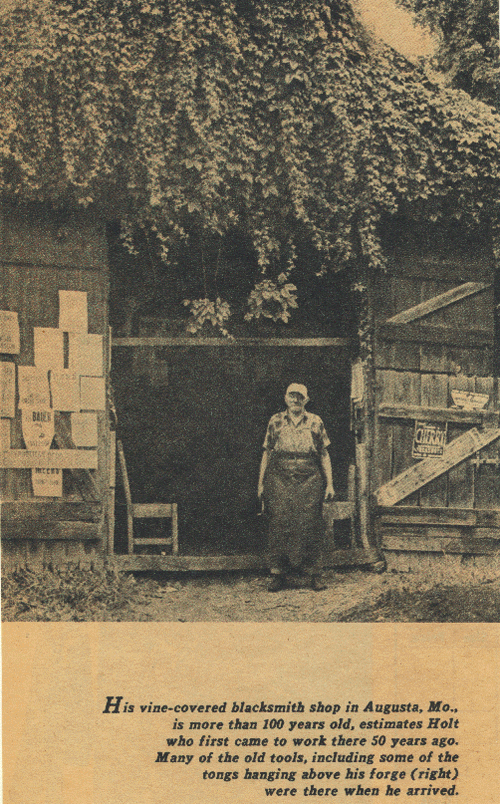
clanging comes from an old wooden shed at the corner of Walnut and
Green streets. Covered with a heavy mass of vines, the ancient
structure seems to list a little to one side under the burden.
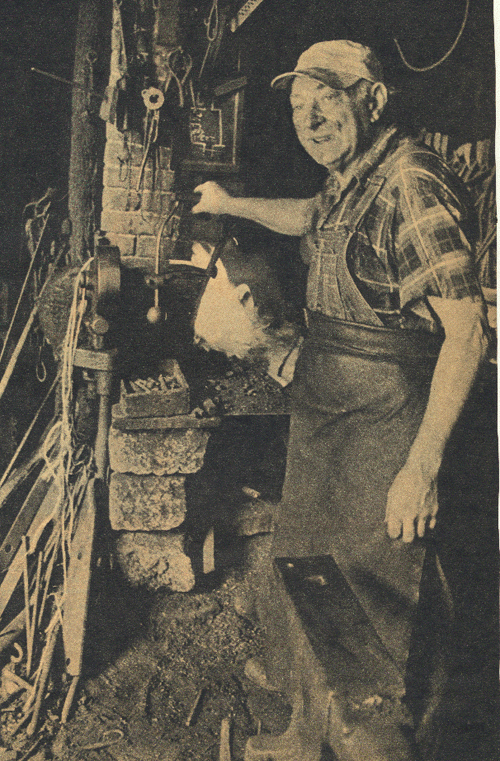
Inside, local blacksmith W. C. Holt is at work as usual.
The W. C. stands for Wilbert Conrad but to most of the people around town, the 74- year-old blacksmith is simply known as "Holt."
"If they say Wilbert, I gotta think who they mean," he confesses with a grin.
At five-foot-eight and 195 pounds, Holt is still the epitome of the sturdy village blacksmith in his horsehide apron, bib overalls, high-top shoes and well-worn billed cap. Smudges of soot and dust from the soft coal used in his forge mark his lined face and there's an ever-present chew of tobacco bulging his jaw.
Holt first came to the shop 50 years ago when he was hired by the previous owner, F. W. Schmidt. Nine years later he bought it from his employer.
It was an old shop even then.
"I wouldn't know how old," says Holt, "but it's old - at least a hundred or more. I added a little bit to it but there are still tongs and hammers that were here when I came. And I even got an old ox shoe over there on that wall."
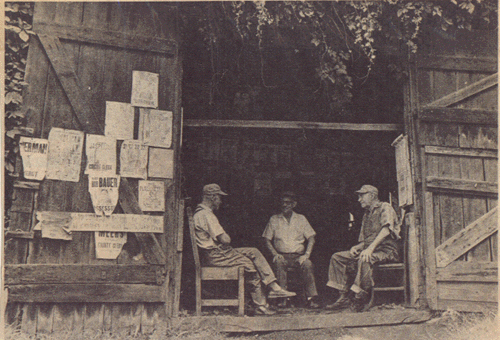
Scores of plowshares and scrap metal litter the dirt floor of the shop and hammers are scattered about the big anvil which is anchored to a massive tree stump. Political handbills from past county elections line the ceiling beams, and here and there are notices for church socials offering such enticements as fried chicken plates, pork sausage and sauerkraut and strawberries and ice cream.
There is no electricity. A one-cylinder gasoline engine provides power through a jackshaft and series of pulleys. "When its gets dark, we go home," Holt declares.
But while his shop hasn't changed much, The blacksmith business has.
"It dwindled away like old folks and old buildings," explains Holt. "In the old days I used to do mostly horse shoeing, wagon repairs and fix plowshares. Well, I still sharpen and straighten shares. There's nobody but me from Union to Wentzville and from St. Charles way up the line that does it anymore. But no more shoeing horses. Got too old, too stiff. When I quit, there was hardly no riding horses; now they're coming back.
"I hear some fellows these days are getting $12 for shoeing a horse. I used to get $4 for shoeing a team. I did it right there where that junk is. That's the ring I tied 'em to.
"But," he adds philosophically, "sometimes I get as many as four or five jobs in a day. And we always do something. Can't sit down in the chair, that's for sure!"
At 8 each morning, lunch box in hand, Holt leaves the house he shares with a bachelor son and walks a couple of blocks down Walnut street to his shop. His wife died 17 years ago and a daughter, who lives in nearby Washington, helps the two men with their housekeeping. Another son and daughter live out of town.
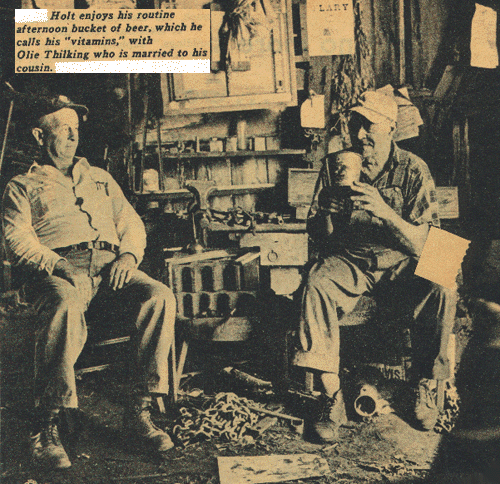
About a half hour before he leaves the shop which is "in the neighborhood of 5:30," the blacksmith usually takes a small tin bucket and heads across the street to the tavern for his daily bucket of beer.
"That's my vitamins," he says. "Some people go to the doctor; some people don't. I don't even have a family doctor."

Frequently, Holt shares his beer with visitors who drop in - like Olie Thilking who is married to his cousin. Olie, who drives a gasoline truck, comes by "most days around 5."
The blacksmith shop has always been a favorite gathering spot for the men of Augusta.
"They just come here to pass away the time when their cars are being greased or somethin'. And I never run nobody out," Holt points out with a trace of pride.
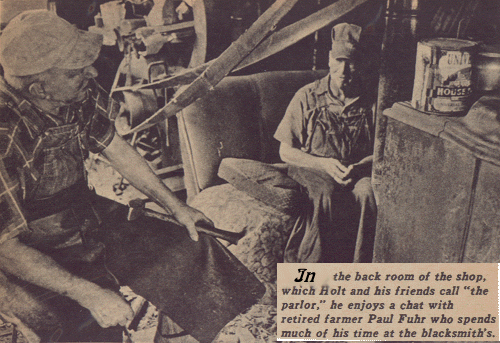
One of his regulars is retired farmer Paul Fuhr whose father had a wagon-making business years ago in the back room of the shop. The room, wryly dubbed "the parlor", still has old wagon wheel patterns hanging on the walls along with some of the other original woodworking equipment. Fuhr keeps Holt company during the day and occasionally lends a helping hand on a job.
"You oughta see this place when the weather gets cold," advises Fuhr. "Sometimes there are six or eight Of us sittin' around that old stove back in the parlor and talkin'."
"Ach, that's right,' agrees Holt. "We get lots of 'em here in the winter."
The Augusta blacksmith has no notion of retiring.
"What was that?" he asked almost incredulously when the question was put to him. "Oh, no, no. Gotta make a living and we can't do it that way,"
 |
 |
 |
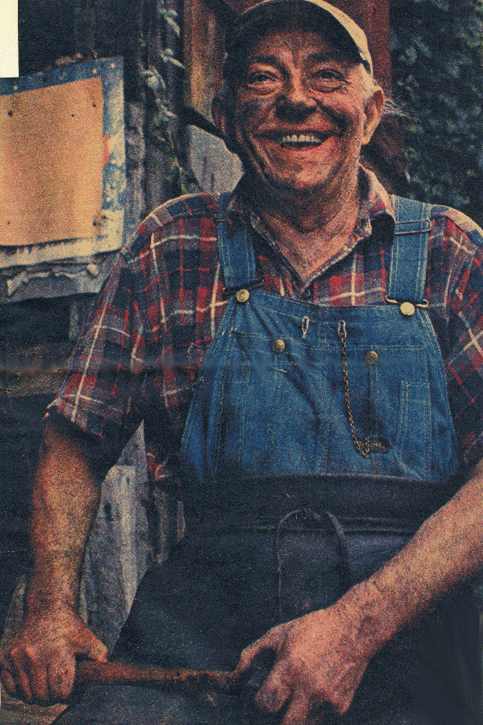
This photo, which appeared on the cover of Globe Democrat August 20, 1967 was later judged one of the Nation's 10 Best.
The Village Blacksmith Shop, W.C. Holt
W C Holt and Paul Fuhr, in the parlor
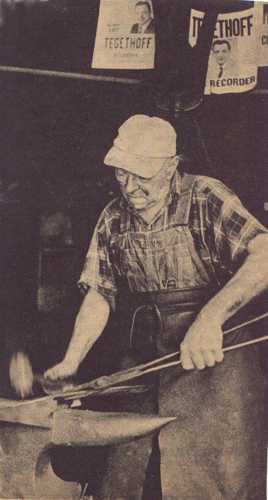
Blacksmith sharpens and strightens a plowshare. "There's nobody but me from Union to Wentzville and from St. Charles way up the line that does it anymore," he says.