 |
 |
|
 |
 |
 |
 |
 |
 |
 |
 |
 |
 |
- Monday 17 July 2000
by Mabel Busdieker -- photos can be seen at the bottom of this page
At 1 pm the ten of us headed for Steinfurt with Karen as Navigator with map in hand and Ruth driving the lead car this time. After a one hour ride from Westerkappeln we reached the outskirts of Steinfurt and slowly kept driving through the streets and surprisingly were right in front of the Wasser Schloss - Castle surrounded with a moat filled with water and ducks. Since the tour would begin at 2:30 we only had 20 minutes to wait. The tour guide came, we each paid 3 DM and listened to her German voice with Ray occasionally translating phrases. At the entrance was an old tower that had served as a guard house with openings near the top where guards could keep their eye out for enemies. Through many different centuries parts of the castle were built beginning in 900 AD. At present several families live in certain sections of the castle helping to maintain it in its present beautiful condition. Horse stables were still in use today.
Occasionally a 60 year old princess would ride through the castle walkways is what the guide said in response to a little girls question. Three gardeners were employed full time to beautify the grounds. Walkways were brick and permanent rock and concrete bridges were now over the moat replacing the original wooden drawbridges. Swans - a common symbol for royalty were on weather vanes, figurines and seeming to embrace 2 round black iron stoves near the inner gate. Four small cannons were nearby. They had been wedding gifts to nobility to be fired when the first heir was born. The oldest section of the castle was in Renaissance Style and not destroyed during the wars. We went inside the arched doorways which revealed the first chapel where religious services were held. Arched doorways on four sides made the floor space in the shape of a cross. In later years peasants attended services in this lower level while the nobility were listening from the level above and could look down when wooden doors in the ceiling were opened. On that upper level now there is an alter, pulpit and benches where Protestant services are held occasionally like a baptism, etc. On the wall was wooden inscription of Apostle's Creed, Ten Commandments and Lord's Prayer. Through the years this chapel had been used by Catholics and Protestants - occasionally the same day by changing alter cloths, etc.
Next we walked into the Large Ladies Room where we saw one of the only two fireplaces in the castle (other was in the kitchen). The ladies gathered in their room because it was a place to keep warm and talk to other women. Perhaps their long dresses helped keep them warm. Close by was a large ball room with paintings of men on the walls. One of the men had started a nearby college until 1810 when Napoleon caused it to cease. In corners of the room were knights in armor - I snapped a photo of Ruth with one. Knights had often gathered in part of the castle that is known as the Romanistic Section - now all covered with vines.
As we were leaving the castle we photographed the four Bergfeld descendants - Marilyn, Lyle, Karen, and Ruth - near an arch in front of the old section. When I told the guide their ggg grandfather had played a musical instrument in the castle orchestra, she was very interested and said she had a book at home which had the names of the members of the orchestra in 1805. She would go home to get it and see if Bergfeld was in it. We arranged to meet her at a cafe across the street. There Fritz paid for our drinks while we chatted with her and excitedly discovered the name BERGFELDT on the list. He was listed as Contra Bass (one of three) . A total of 42 musicians and 7 singers names were listed as members of the Duke's Orchestra in 1805. The guide said she could buy another book, and we could have this one. Ruth gave her 9 DM for the book.
From the Schlossmuhle Restaurant we walked across the street back to our parking lot. The ten of us piled into our two cars and, following Karen's intuition and the guide's suggestions, headed (several miles away it seemed) for a look at Bango where a concert hall had been located for centuries and recently reconstructed. It was located in a wooded park setting. At the parking lot was the Bagno sign and also a Cafe-Restaurant. We walked along a wide path through the woods following arrows until reaching a large building with six large windows on each of two sides. It was the Concert Gallery which had been renovated in the 1990's still resembling the one that was built in the late 1700's and possibly where in 1805 our Bergfeld ancestor played in the orchestra. Castle and town archives, (previously researched by Walter Kamphoefner) seemed to indicate he (Bergfeld) played the oboe. However, the "Das Bagno in Steinfurt" book Ruth bought from the guide states that Bergfeldt was a Contra Bass player in the Courtyard Band in 1805. Just as other tourist were doing, we looked thru the windows of the Concert Gallery and saw many chairs as well as a stage-like area in one section. Even though the building held only 300 people, the twelve French windows could be opened up like doors so that many more guests invited by the nobility could enjoy both music and nature in the surrounding park area. [Das Bango in Steinfurt p.90] The Concert Gallery was connected to the lounge building by a wooden walkway-tracklike.
We traveled back to Westerkappeln on the Autobahn with unlimited speed permitted by cars in most sections.
The car with Lyle as driver was following the car Ruth was driving. Occasionally we glanced back and suddenly did not see his car any more. Even slowing up didn't reveal that car behind us. An atmosphere of silence was in our car as slowly we drove on, wondering if a flat tire or other problem had caused a delay. Surprising when we arrived at the hotel it was a sense of relief to find they were there already. In heavy traffic they had whizzed by in the other lane without us noticing -- so all's well that ends well.
In the evening we had an appointment at the "Gastette" our hotel for an interview by a reporter from the Osnabrueker Newspaper. He was especially interested in impressions of Germany on the first time visitors. Before that interview was concluded, in walked another reporter from the Westerkappeln newspaper to ask more questions. A photograph session followed and finally we were free to eat supper. which we ordered and ate at the same table where the interviews took place.
|
|
|
|
|
|
|
|
|
|
|
|
|
|
|
|
|
|
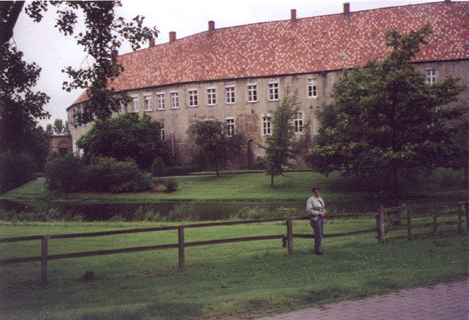
Ruth outside the castle at Steinfurt
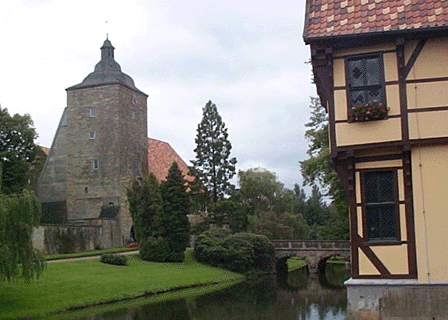
Showing parts of the inner and outer castle with the in-between moat. The castle was built over several hundred years, parts as early as the 10th century and parts as late as the 19th century

House of Countess Walburg , this was done by Sculpter Johann Brabender in 1559.
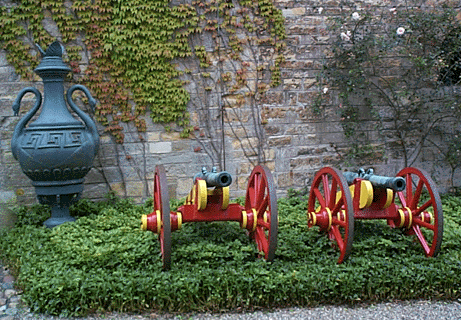
The swan has an oven in back, the cannons were a wedding present to be fired after the birth of their first born.
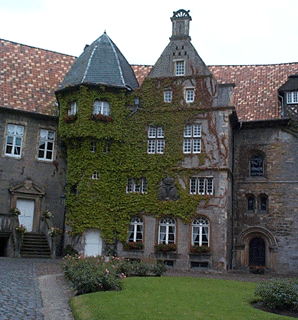
This is an example of the Romanistic part of the castle. Using the middle white door we entered into the lower part of the double chapel.
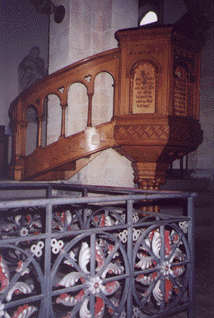
The iron grates surround the hole above the lower chapel where peasants would stand during the worship services. Only the nobility would be allowed on the top floor.
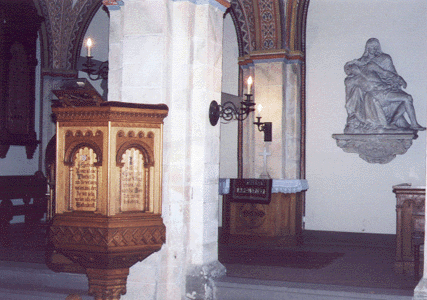
At times in its history, Catholic and Protestant services were held alternately.
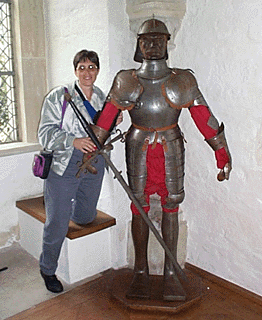
This was in a hall used for gatherings
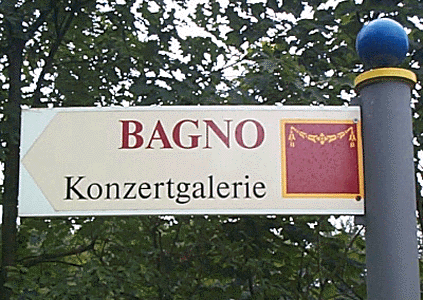
This was where my gggg Grandfather Bergfeld played the Contra Bass in 1805.
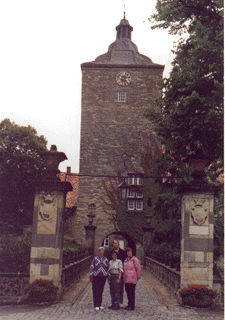
Lyle Rosburg behind Marilyn Rosburg, Ruth Busdieker, and Karen Rosburg. Their Bergelt ancestors lived and worked here.
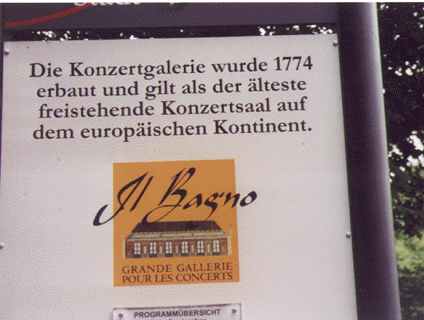
The Concert Gallery was built in 1774 and is regarded as the oldest freestanding Concert Hall on the European Continent.
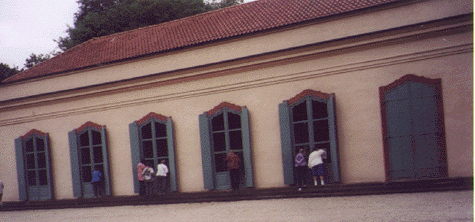
Just like other tourist, we looked thru the windows of the Concert Gallery and saw many chairs as well as a stage-like area in one section. Even though the building held only 300 people, the twelve french windows could open up like doors so that many more guests invited by the nobility could enjoy both music and nature in the surrounding park area. This is where Johann Bergfeldt played the Contra Bass in 1805.
Return to small photos Return to top